Mortgage Blog
Your Ultimate Guide to Getting a Cottage Mortgage in Canada
July 31, 2026 | Posted by: Matt Shepherd
Understanding Vacation Cottage-Property Mortgages
Dreaming of a peaceful retreat away from the city? Securing a Vacation Cottage-Property Mortgage is the first step toward owning your perfect getaway. Whether you are looking at seasonal property loans for a summer cabin or financing for year-round waterfront cottages, understanding the nuances of a Cottage Mortgage is essential.
As a leading mortgage broker based in Burlington, ON, Jason Woods and the TLC Mortgage Group team specialize in helping clients navigate the complexities of cottage mortgage canada guidelines. We know that buying a second property is a major financial decision. That is why we are experts at providing second opinions on vacation and cottage property mortgages, ensuring you get the most competitive rates and terms available.
- Type A Cottages: Winterized, year-round access, treated much like a standard home.
- Type B Cottages: Seasonal access, un-winterized, requiring specialized seasonal property loans.
If you are also considering purchasing across the border, you might want to explore a second-home-vacation-home-mortgage USA to understand the differences in international financing.
Financing Waterfront Cottages and Seasonal Properties
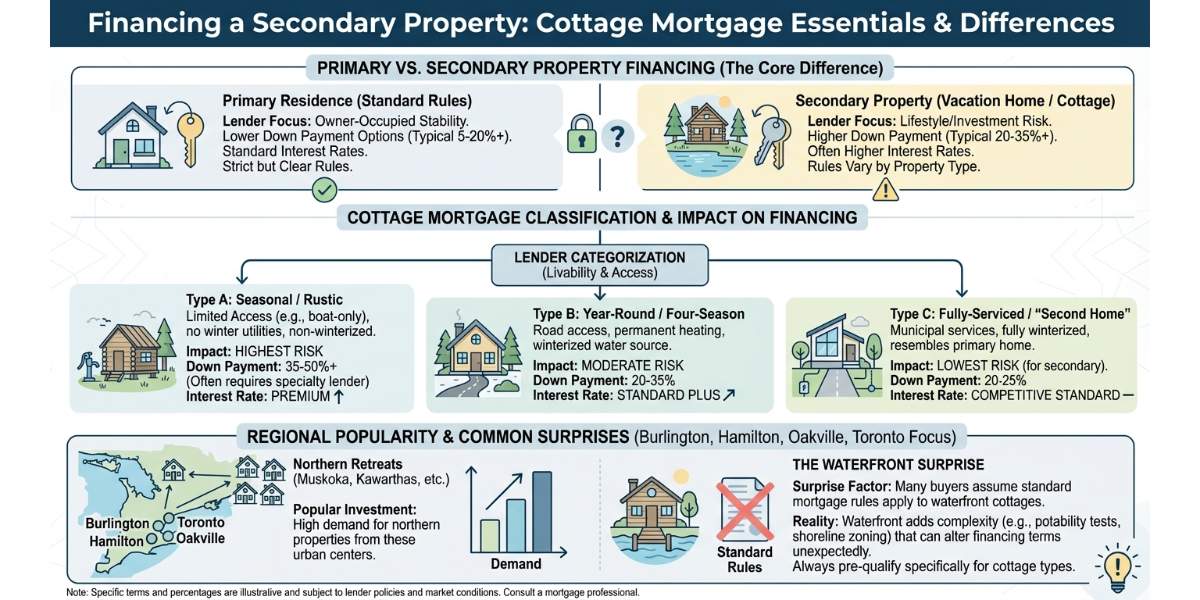
Financing a secondary property is different from your primary residence. Lenders categorize vacation homes based on their livability and access. When applying for a Cottage Mortgage, your down payment and interest rate will depend heavily on the property type.
For residents in Burlington, Hamilton, Oakville, and Toronto, investing in a northern retreat is incredibly popular. However, many buyers are surprised to learn that standard mortgage rules do not always apply to waterfront cottages. Here is what you need to keep in mind:
- Down Payment Requirements: Year-round properties typically require a minimum 5% down payment, whereas seasonal properties often require at least 10% to 20% down.
- Interest Rates: Depending on the lender, seasonal property loans might carry slightly higher interest rates due to the perceived risk.
- Water and Heating Source: Lenders will scrutinize whether the property has a permanent heat source and potable running water.
Are you unsure if your current pre-approval offers the best terms? We are experts at providing second opinions on vacation and cottage property mortgages. Let us review your file to see if we can secure a better deal for your dream waterfront escape.
| Property Feature | Type A (Year-Round Cottage) | Type B (Seasonal Cottage) |
|---|---|---|
| Minimum Down Payment | 5% (with mortgage insurance) | 10% to 20% |
| Access | Year-round road access | Seasonal road or boat access |
| Heating System | Permanent, winterized central heating | Wood stove or space heaters |
| Foundation | Permanent foundation below frost line | Floating, blocks, or pilings |
| Water Source | Potable running water (well/municipal) | Lake water or holding tank |
How to Prepare for Your Cottage Mortgage Application
Getting approved for a Vacation Cottage-Property Mortgage requires careful financial planning. Since this is a second property, lenders will look closely at your debt-to-income ratio to ensure you can comfortably manage both your primary mortgage and your new cottage mortgage.
Steps to Secure Your Financing
- Calculate Your Equity: If you already own a home in Burlington or the surrounding areas, consider mortgage refinancing to unlock equity for your cottage down payment.
- Gather Documentation: Have your income verification, tax returns, and property details ready. Lenders need comprehensive details about the cottage's foundation, water source, and winterization status.
- Get a Second Opinion: Never settle for the first offer. Because we are experts at providing second opinions on vacation and cottage property mortgages, we often find our clients better rates and more flexible terms through our network of over 40 lenders.
Whether you are eyeing a rustic cabin in the woods or a luxurious lakeside retreat, having the right broker by your side makes all the difference. Contact Jason Woods today to explore your cottage mortgage canada options and start making memories by the lake.
Q1: What is the minimum down payment for a cottage mortgage in Canada?
For a year-round, winterized cottage (Type A), you can put down as little as 5%. For a seasonal, un-winterized property (Type B), you will typically need a 10% to 20% down payment.
Q2: Can I use the equity in my current home to buy a vacation property?
Yes! Many clients in Burlington and surrounding areas use a home equity line of credit or mortgage refinancing on their primary residence to fund the down payment for their waterfront cottages.
Q3: What is the difference between a Type A and Type B cottage?
Type A cottages are winterized, accessible year-round, and have a permanent foundation and heat source. Type B cottages are seasonal, might only have boat access, and lack permanent winter heating.
Q4: Do you provide second opinions on vacation property mortgages?
Absolutely. We are experts at providing second opinions on vacation and cottage property mortgages, ensuring you receive the most competitive rates from our network of over 40 lenders.
Q5: Are interest rates higher for seasonal property loans?
Interest rates for seasonal properties can sometimes be slightly higher than standard residential mortgages due to the increased risk for lenders, but working with an experienced broker can help you secure the best possible rate.
Apply for Your Cottage Mortgage Today